
Avoiding reassessments by correctly declaring the value of servers, switches, and warranties. Speed matters in global IT deployments. When a data center component fails or a regional expansion project requires rapid equipment availability, the ability to respond in hours rather than days is the difference between business continuity and costly disruption.
This concept has gained significant traction among technology companies, IT service providers, and telecommunications operators. By placing inventory strategically close to where it is most likely to be needed, businesses reduce lead times, lower freight costs, and strengthen service commitments. In a global trade environment shaped by tariff volatility and supply chain complexity, proactive compliance has never been stronger.
What Are the Core Requirements?
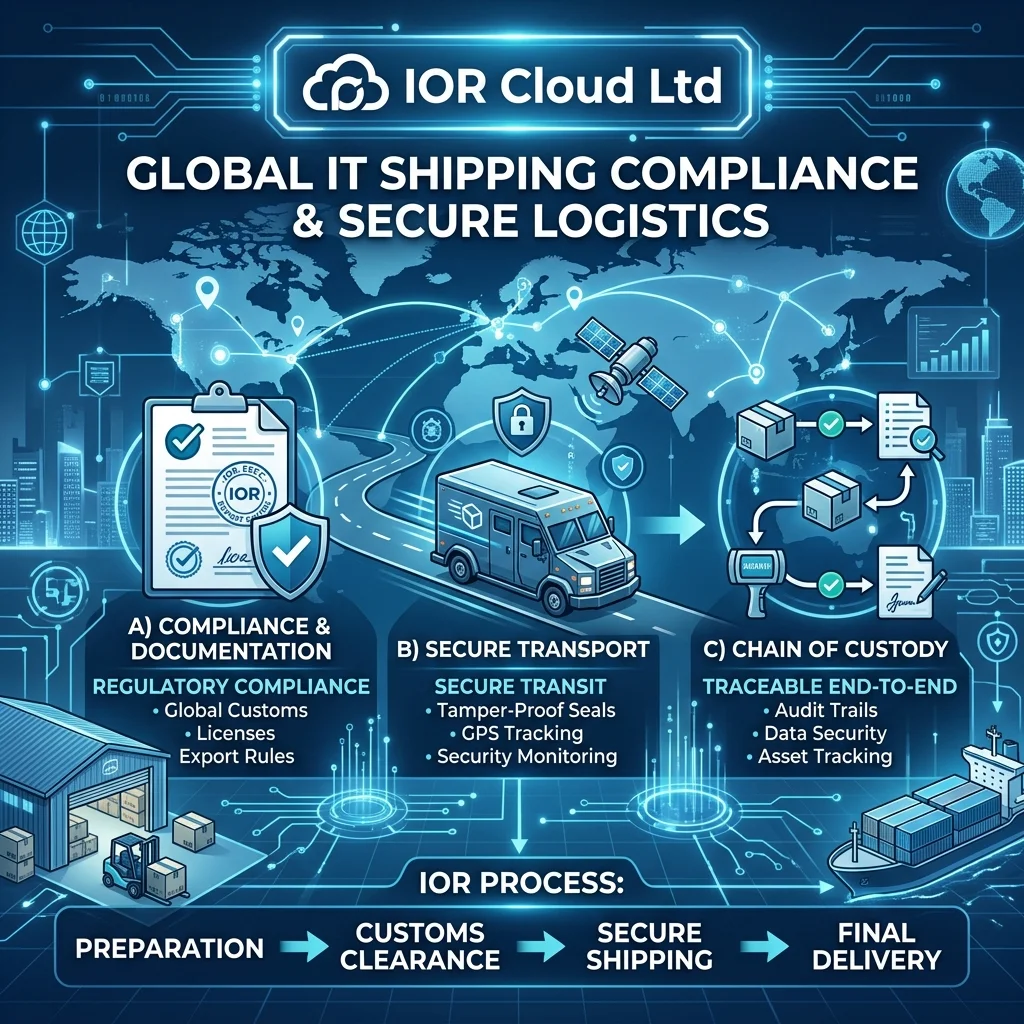
According to our compliance experts, securing rapid deployment is only possible when all local regulations are met in advance. Unlike a central distribution warehouse that serves as a master inventory hub, a localized staging area must frequently clear customs ahead of time. This includes telecom type approvals, health authority registrations, and safety certifications.
The model reflects a fundamental shift in logistics thinking. Rather than relying on a single large warehouse and accepting long delivery windows, companies distribute inventory across multiple strategic points, creating a network that can fulfill urgent orders locally without resorting to expensive air freight or emergency logistics. Decentralizing distribution can reduce transit time from days to hours while delivering significant cost savings.
Why Proactive Compliance Has Become Essential

The traditional centralized warehouse model worked well when supply chains were predictable, and customers had more tolerance for wait times. Neither of those conditions holds consistently today. Tariff-related logistics costs jumped approximately 15% across consumer goods in recent years, and geopolitical disruptions continue to create unpredictability in long-haul freight timelines. In this environment, having inventory already positioned close to the point of need is not just operationally convenient; it is a competitive necessity.
For industries with strict service-level agreements, the value is even more direct. They are critical for IT, medical devices, and telecom industries that live and die by strict SLAs.
Key Benefits
The advantages extend across operations, customer experience, cost management, and market expansion. Understanding the full scope of these benefits helps organizations make informed decisions.
Dramatically Reduced Delivery Times
The primary purpose is to reduce the time it takes to deliver goods and improve service levels. Delivery windows that would typically require days from a central location can be compressed to a few hours using nearby stock. For urgent service calls or time-critical deployments, that reduction in lead time directly affects both customer satisfaction and operational efficiency.
Lower Freight Costs
Speed is typically expensive in logistics. A well-placed local inventory enables more cost-effective local delivery options, rather than relying on express services typically by air. When inventory is positioned close to the delivery point, local ground delivery can handle urgent orders at a fraction of the cost of long-haul express freight.
Improved Service Level Agreement Compliance
Service level agreements define the performance standards that technology companies must meet for their customers. Local staging helps businesses meet strict SLAs by ensuring spare parts and critical equipment are readily available for same-day or next-day delivery.